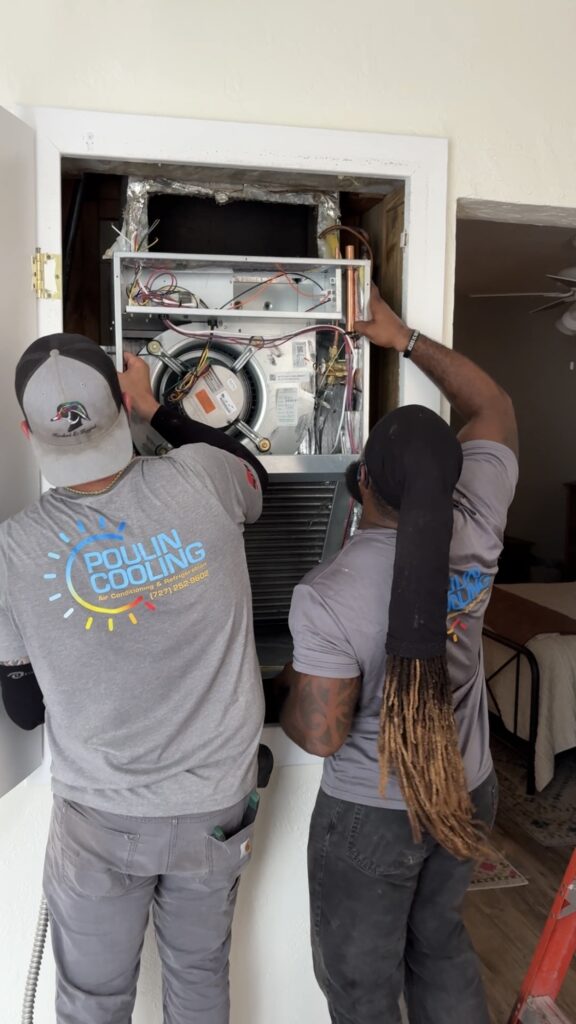
Florida summers are no joke. With temperatures soaring and humidity levels that can make even a short walk to your car feel like a sauna, a well-functioning air conditioning system isn’t a luxury, it’s a necessity. At Poulin Cooling, we’ve spent over a decade keeping homes and businesses operational and comfortable across Clearwater, St. Petersburg, Largo, Dunedin, and the entire Tampa Bay area.
Follow these 10 homeowners tips to help your AC unit run efficiently all summer long, saving you money, preventing breakdowns, and keeping your home the cool retreat it should be.
Read the expert advice from your local Clearwater HVAC specialists, Poulin Cooling.
TIP #1: Change Your Air Filter Regularly
Your air filter is the first line of defense for your AC system. A clogged or dirty filter restricts airflow, forcing your unit to work harder, and that means higher energy bills and more wear on the system. During peak summer months in Florida, we recommend checking your filter every 30 days and replacing it at least every 60–90 days. If you have pets or allergy sufferers in the home, consider changing it monthly. You may also want to invest in indoor air quality improvements with high efficiency filters. Give us a call to find out more about how we can help.
TIP #2: Schedule a Pre-Summer Professional Tune-Up
The best time to catch a problem is before summer is in full swing. An annual maintenance visit from a certified technician covers everything your system needs to perform optimally:
- Cleaning the evaporator and condenser coils
- Checking refrigerant levels
- Inspecting electrical connections and components
- Lubricating moving parts
- Testing system performance and airflow
Poulin Cooling offers Basic, Enhanced, and Ultimate maintenance plans so you can choose the level of coverage that fits your needs and budget. Visit our maintenance plans.
TIP #3: Keep Your Outdoor Unit Clear of Debris
Your condenser unit outside needs room to breathe. Leaves, grass clippings, dirt, and even overgrown shrubs can restrict airflow around the unit, reducing efficiency and potentially causing it to overheat. Make sure there’s at least 2 feet of clearance on all sides. Gently rinse the exterior fins with a garden hose to remove buildup, but never use a pressure washer, as the fins are delicate.
TIP #4: Use a Programmable or Smart Thermostat
Smart thermostats are one of the easiest upgrades you can make for both comfort and efficiency. Program your thermostat to raise the temperature a few degrees when you’re away from home and cool things down before you return. The Department of Energy estimates you can save up to 10% per year on heating and cooling by adjusting your thermostat 7–10 degrees for 8 hours a day. Your wallet, and your AC system, will thank you.
TIP #5: Seal Air Leaks Around Doors and Windows
If your home has air leaks, your AC is constantly fighting a losing battle against the Florida heat. Check the weatherstripping around exterior doors and the caulking around windows. Even small gaps can let in a significant amount of hot, humid air. Sealing these leaks is a low-cost fix that makes an immediate difference in how hard your system has to work.
TIP #6: Don’t Ignore Unusual Noises or Warning Signs
Your AC system will often give you warning signs before it completely breaks down. Don’t ignore these red flags:
- Grinding, squealing, or banging noises
- Warm or weak airflow from vents
- Unusual odors (musty, burning)
- Frequent on/off cycling
- Unexplained spikes in your electric bill
- Water pooling or leaking around the unit
Catching problems early saves money and avoids the misery of a mid-summer breakdown.
TIP #7: Keep Vents Open and Unobstructed
A common misconception is that closing vents in unused rooms saves energy. In reality, it can create pressure imbalances in your ductwork and put extra strain on your system. Make sure all supply and return vents throughout your home are open and unblocked by furniture, rugs, or curtains. Good airflow distribution is key to efficient operation.
TIP #8: Clear the Condensate Drain Line
Florida’s humidity means your AC pulls a lot of moisture from the air, and that moisture has to go somewhere. The condensate drain line removes this water, but over time it can become clogged with algae, bacterial growth, or debris. A clogged drain can cause water damage or trigger your system to shut off automatically. Pour a cup of diluted bleach or white vinegar down the drain line every few months to keep it clear.
TIP #9: Reduce Heat Load Inside Your Home
The less heat your home generates internally, the less work your AC has to do. Simple habits make a big difference: use ceiling fans to circulate air (set them counterclockwise in summer), close blinds and curtains on sun-facing windows during the hottest part of the day, run appliances like dishwashers and dryers in the early morning or evening, and switch to LED lighting, which generates far less heat than incandescent bulbs.
TIP #10: Know When It’s Time to Replace Your System
Even a well-maintained AC system has a lifespan. Most HVAC units last between 10 and 15 years, depending on the type of system, maintenance history, and environmental factors. If your unit is over 10 years old, requires frequent repairs, or just can’t keep up with the Florida heat anymore, it may be more cost-effective to invest in a new, energy-efficient model. Modern systems use significantly less energy and come with improved humidity control, a major plus in our climate. At Poulin Cooling, we’ll always give you an honest, unbiased recommendation based on what’s truly best for your home and budget.
Ready for a Summer-Ready AC? We’re Here to Help.
Don’t wait for a breakdown on the hottest day of the year. Poulin Cooling proudly serves Clearwater, St. Petersburg, Largo, Dunedin, Palm Harbor, Tarpon Springs, and all of Pinellas, Pasco, and Hillsborough counties.
Excellence isn’t just our goal. It’s our standard.
Call: (727) 252-9602
Schedule with Poulin Cooling Online