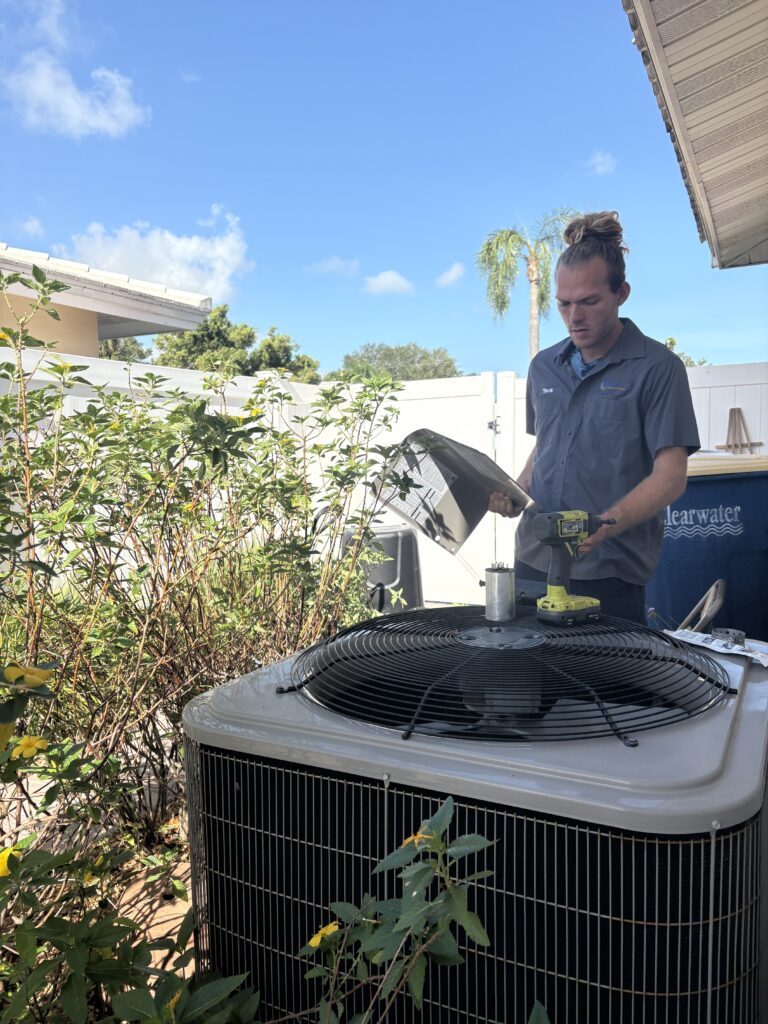
Quick answer, yes. Cleaning your outdoor AC condenser can help your system run more efficiently. When dirt, grass clippings, leaves, debris, or salt residue build up around the condenser coil, your AC has a harder time releasing heat. That makes the system work longer and harder, especially during Florida summers.
A simple rinse with a garden hose can help, but it has to be done correctly.
What the Outdoor AC Condenser Does
Your outdoor AC unit is not just a box with a fan in it. It is where the system releases heat from inside your home.
The indoor system absorbs heat from the air. The refrigerant carries that heat outside. The outdoor condenser coil releases that heat into the air.
When the condenser coil is dirty, the system cannot dump heat as easily. That can lead to:
- Longer run times
- Higher energy use
- Higher system pressure
- Reduced cooling performance
- More wear on the compressor
- More risk of overheating during peak summer heat
The outdoor unit needs open airflow around it to do its job.
Why Florida AC Condensers Get Dirty Fast
Florida systems run hard. In many homes, the AC is running for most of the year.
Outdoor units also deal with:
- Grass clippings from lawn crews
- Leaves and pine needles
- Sand and dust
- Pollen
- Storm debris
- Mulch
- Weeds growing around the unit
- Salt air in coastal areasCorrosion on coil, cabinet, screws, and exposed metal
- Coil cleaning needs or manufacturer-approved treatment options
Even a thin layer of dirt on the condenser coil can reduce airflow through the coil.
How to Rinse Your Outdoor Condenser
This is one maintenance step many homeowners can do themselves.
Before you start, turn the system off at the thermostat. If you know how to safely turn off power at the outdoor disconnect, do that too.
Then follow these steps:
- Clear debris around the unit: Remove leaves, sticks, weeds, and anything blocking airflow.
- Trim plants back: Keep shrubs, plants, and tall grass away from the unit. The condenser needs room to breathe.
- Use a regular garden hose: Do not use a pressure washer. High pressure can bend the coil fins.
- Rinse from the top down: Let water wash dirt and debris down and away from the coil.
- Use gentle water pressure: The goal is to rinse the coil surface, not blast it.
- Let the unit drain: Give it a few minutes before turning the system back on.
What Not to Do
Do not remove panels unless you know what you are doing. There are electrical components inside the outdoor unit.
Avoid these mistakes:
- Do not use a pressure washer
- Do not bend the coil fins
- Do not spray harsh chemicals into the unit
- Do not run the system while rinsing
- Do not ignore electrical safety
- Do not try to repair refrigerant lines yourself
- Do not spray harsh chemicals into the unit
A homeowner rinse is helpful, but it does not replace professional maintenance.
What About Salt Air Near the Coast?
For homes near the coast, the outdoor AC unit may also deal with salt residue. Salt air can settle on the condenser coil, cabinet, screws, and other exposed metal parts. Over time, that can speed up corrosion and make the outdoor unit harder to maintain.
A gentle fresh-water rinse can help remove salt residue before it builds up. However, coastal corrosion is different from ordinary dirt or grass clippings. If the unit is close to salt air, a technician should also inspect the coil, cabinet, electrical area, and metal components for signs of corrosion.
Some coastal AC systems are built with corrosion-resistant materials or factory-applied protective coatings. If corrosion is already showing, ask a qualified technician whether manufacturer-approved cleaning, coil treatment, or replacement planning is appropriate. Do not apply harsh chemicals or coatings yourself unless they are approved for your equipment.
What a Technician Checks During Condenser Maintenance
During a professional AC maintenance plan, a technician does more than rinse the outside of the unit.
A maintenance visit may include checking:
- Condenser coil condition
- Fan motor operation
- Capacitor readings
- Contactor condition
- Refrigerant performance
- Electrical connections
- Amp draw
- System pressures
- Drain line condition
- Airflow
- Temperature split
- Thermostat operation
This matters because a condenser can look fine from the outside and still have weak parts inside.
How Often Should You Rinse the Outdoor Unit?
In Florida, it is smart to visually check the outdoor unit once a month during heavy cooling season.
You may need to rinse it more often if:
- Lawn crews blow grass toward the unit
- The unit sits near trees
- The yard has mulch or loose dirt
- You live near the coast
- The system runs constantly
- You have had recent storms
At minimum, the unit should be professionally checked before peak summer heat.
Signs the Outdoor Unit Needs Attention
Call for service if you notice:
- AC running longer than normal
- Warm air from vents
- Outdoor fan not spinning
- Loud buzzing or humming
- Ice on refrigerant lines
- Breaker tripping
- Burning smell
- System shutting off before cooling the house
- Higher electric bills without a clear reason
A dirty condenser is one possible cause, but it is not the only one.
Choose Poulin Cooling AC & Refrigeration
Cleaning your outdoor AC condenser can help reduce the workload on your system. It is one of the simplest maintenance steps a homeowner can take.
A few minutes with a hose can help airflow, cooling, and efficiency. But if the system is struggling, running hot, or not cooling properly, schedule professional service.
For seasonal inspections, coil cleaning, drain line checks, and system testing, ask Poulin Cooling about an AC maintenance plan.
FAQ
Can I clean my AC condenser myself?
Yes, you can rinse the outside of the condenser with a garden hose. Do not use a pressure washer or open electrical panels.
Does a dirty condenser make my AC use more electricity?
It can. A dirty condenser can reduce heat transfer, which makes the system work harder to cool the home.
How often should I clean my outdoor AC unit in Florida?
Check it monthly during summer. Rinse it when you see dirt, grass, leaves, or debris on the coil or around the unit.
Is rinsing the condenser the same as professional maintenance?
No. Rinsing helps, but professional maintenance includes electrical checks, refrigerant performance checks, airflow testing, drain line inspection, and more.