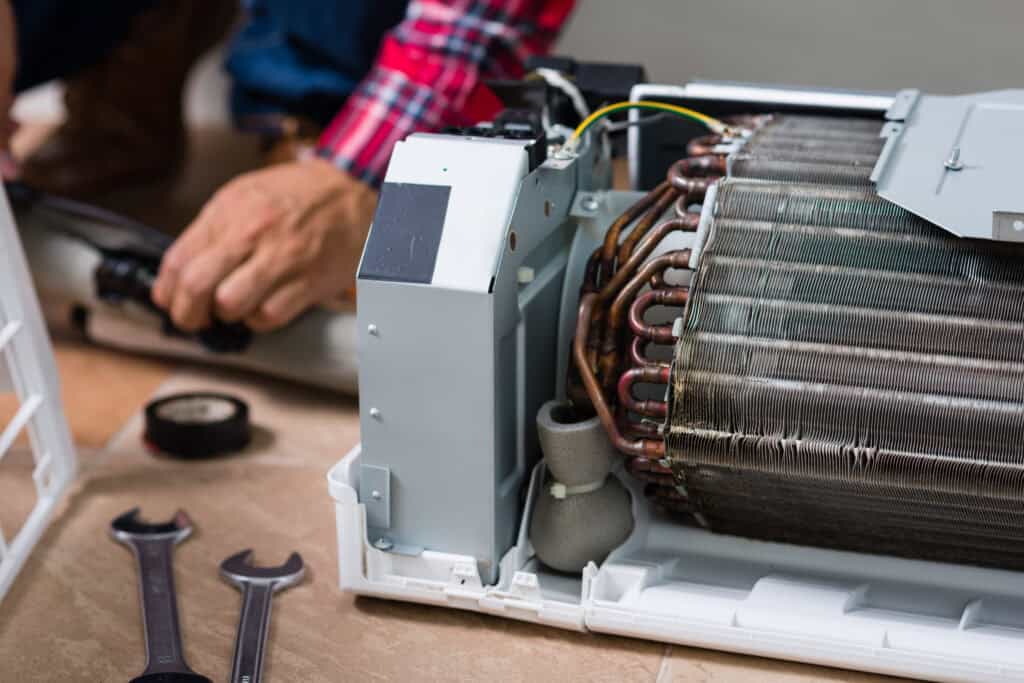
When it comes to AC Repair, AC Maintenance, and even new AC installs, many homeowners are unfamiliar with the internal components that make their cooling system work. Two of the most important parts of any air conditioning system are the condenser coil and the evaporator coil.
Understanding how these components function can help homeowners recognize early warning signs of problems and keep their HVAC systems running efficiently. With proper care and regular maintenance, these components can provide reliable cooling and support your home’s overall heating and cooling performance for many years.
What Does an Evaporator Coil Do?
The evaporator coil is located inside your home, typically within the indoor air handler or furnace. Its primary role is to absorb heat from the air inside your house.
How the Evaporator Coil Works
When your air conditioning system is running:
- Warm indoor air passes over the evaporator coil.
- Refrigerant inside the coil absorbs heat from the air.
- The cooled air is circulated back through your home.
This process is essential for maintaining comfortable indoor temperatures during hot weather. Because the evaporator coil handles heat absorption, it plays a major role in the efficiency of your cooling system.
Common Evaporator Coil Issues
Over time, evaporator coils can develop problems that lead to AC repair needs. Some of the most common issues include:
- Frozen coils caused by restricted airflow or low refrigerant
- Dirt buildup that reduces cooling efficiency
- Refrigerant leaks
- Corrosion or wear often accelerated by salt air and high humidity in Florida
- “Dirty sock syndrome”, a musty or mildew-like odor caused by bacteria and mold buildup on the evaporator coil
Routine AC maintenance helps prevent many of these issues by keeping coils clean and ensuring proper airflow throughout the system.
What Does the Condenser Coil Do?
While the evaporator coil absorbs heat inside your home, the condenser coil releases that heat outdoors. The condenser coil is located in the outdoor unit of your air conditioning system.
How the Condenser Coil Works
After the evaporator coil absorbs heat, the refrigerant carries that heat to the outdoor unit. Inside the condenser:
- The refrigerant releases the absorbed heat.
- The outdoor fan blows air across the condenser coil.
- Heat is expelled outside your home.
This cycle allows the system to continuously remove heat from your living space and maintain comfortable indoor temperatures.
Common Condenser Coil Problems
Because the condenser coil sits outdoors, it is exposed to dirt, debris, and weather conditions. Over time, this can lead to problems that require AC repair.
Typical condenser coil issues include:
- Dirt and debris blocking airflow
- Bent coil fins
- Refrigerant pressure problems
- Reduced cooling efficiency
- Corrosion or wear often accelerated by salt air and high humidity
Professional AC maintenance services often include cleaning the outdoor condenser coil to maintain proper performance.
Key Differences Between Condenser and Evaporator Coils
Although both coils are essential to your cooling system, they serve different functions within the refrigeration cycle.
Main Differences
Evaporator Coil
- Located inside the home
- Absorbs heat from indoor air
- Works with the indoor air handler
- Responsible for cooling indoor air
Condenser Coil
- Located outside the home
- Releases heat outdoors
- Part of the outdoor AC unit
- Helps maintain the cooling cycle
Both components must work together efficiently to keep your system operating properly. When either coil becomes damaged or dirty, it can impact your system’s performance and lead to higher energy costs.
Why Coil Maintenance Is Important
Maintenance is essential for protecting both the evaporator and condenser coils. When coils become dirty or damaged, the system must work harder to maintain the desired temperature.
Benefits of Regular Maintenance
Proper maintenance can help:
- Improve energy efficiency
- Reduce the risk of unexpected AC repair
- Extend the lifespan of your system
- Maintain consistent cooling performance
- Prevent costly breakdowns
Professional technicians can inspect both coils, clean them properly, and ensure the refrigerant system is operating correctly.
For homeowners looking for professional service, Poulin Cooling offers HVAC maintenance plans and repair solutions designed to keep systems running efficiently.
When Repairs or Replacement Are Necessary
In some cases, coils may become too damaged or corroded to repair effectively. When this happens, homeowners may need to consider system upgrades or new AC installs.
Signs that replacement may be necessary include:
- Frequent AC repair calls
- Refrigerant leaks from the coils
- Reduced cooling performance
- Rising energy bills
- System age exceeding 10–15 years
Professional technicians can evaluate whether repairing the coils or upgrading the system is the best long-term solution.
If your system is older, investing in modern new AC installs can provide improved energy efficiency and better indoor comfort.
Heating Systems Also Require Regular Care
While air conditioning is essential during warm months, your HVAC system’s heating components also require regular attention. Many homes rely on integrated HVAC systems where heating and cooling components work together.
Routine inspections help ensure both heating and cooling systems operate safely and efficiently throughout the year.
Keep Your HVAC System Running Efficiently
Understanding the difference between the condenser coil and evaporator coil can help homeowners recognize potential problems early. With proper AC maintenance, regular inspections, and professional service when needed, these components can continue operating efficiently for many years.
Contact Poulin Cooling Today
Want help with your air conditioning system? The experienced team at Poulin Cooling provides expert AC repair, maintenance, heating services, and new AC installations.
Call us at (727) 252-9602 or contact us now to schedule professional HVAC service.