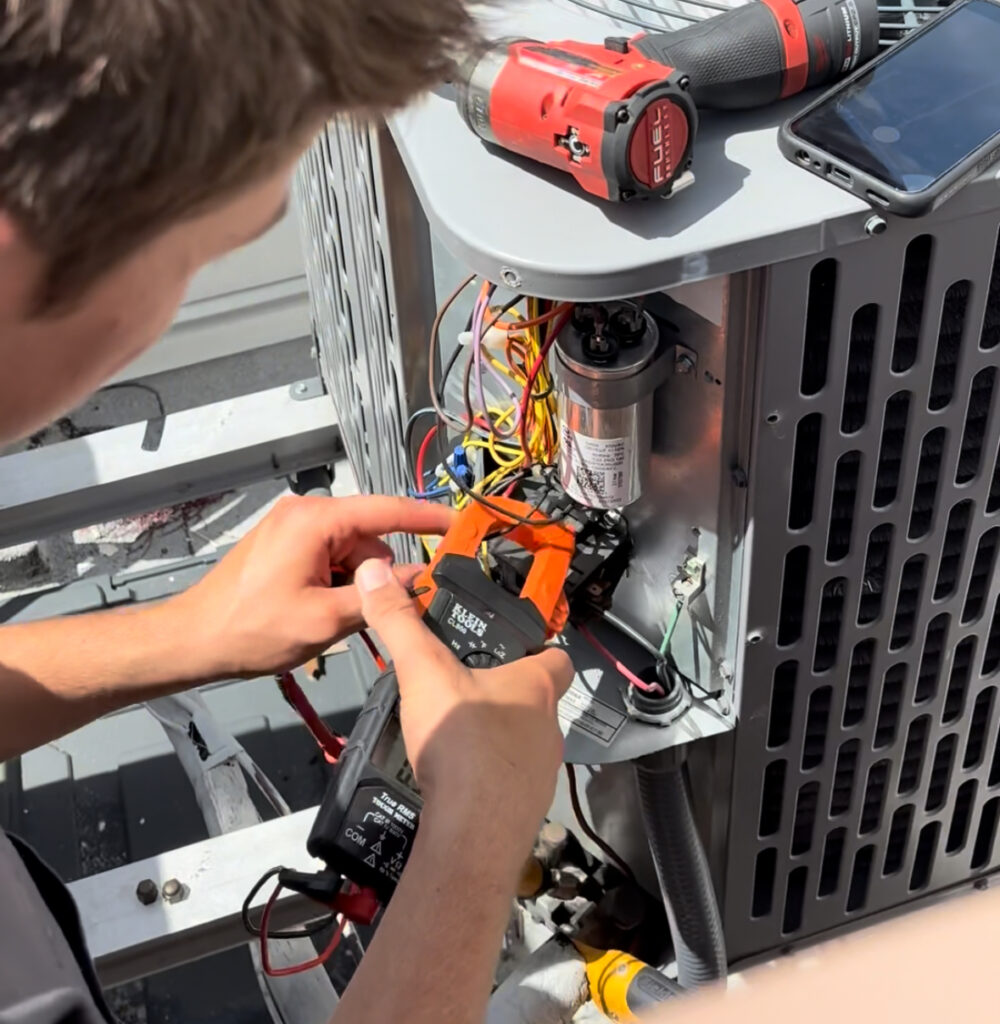
If you notice rodents chewing through the spray foam around your AC lines, do not ignore it. That small opening can lead to bigger problems, including damaged insulation, exposed wiring, pest entry, moisture issues, and reduced system performance.
To help stop rodents from chewing through the foam around your AC unit, the damaged foam should be removed, the opening should be packed with a rodent-resistant barrier like stretched-out steel wool, copper mesh, or stainless steel mesh, then sealed with an exterior-grade sealant.
Spray foam by itself is usually not enough. Rodents can chew through it again.
Why Rodents Chew Around AC Lines
Your outdoor AC unit connects to your home through refrigerant lines. These are the copper lines that move refrigerant between the outdoor condenser and the indoor system.
Where those lines enter the home, there is usually a small wall opening. That area is often sealed with spray foam, caulk, or another filler.
Rodents may chew around this area because:
- Spray foam is easy to tear apart
- Small gaps give them a place to start chewing
- The area may feel protected from rain and sun
- Warm air from the home can attract pests
- Bushes, leaves, mulch, or debris nearby can give them cover
Once they start chewing, the opening can get larger. That can allow pests, insects, moisture, and outdoor air to get closer to the inside of your home.
How to Seal the Area Properly
The goal is to block the opening with something rodents do not want to chew through, then seal the area so it is protected from weather.
A common method is:
- Remove any loose or damaged spray foam.
- Check the opening around the AC lines.
- Stretch out steel wool or use pest-resistant mesh.
- Pack it carefully around the opening.
- Seal the area with an exterior-grade sealant.
Steel wool can help because rodents do not like chewing through the sharp metal fibers. However, in Florida’s humidity, regular steel wool can rust if it stays exposed. That is why it should be sealed properly or replaced with a more weather-resistant option like stainless steel mesh or copper mesh when needed.
Be Careful Around AC Lines and Wiring
The area around your AC line set is not something you want to handle roughly.
Your line set may include:
- Copper refrigerant lines
- Pipe insulation
- Low-voltage wiring
- Drain line components nearby
Do not pull on the copper lines, cut into insulation without knowing what is underneath, or pack material into electrical areas. You also do not want to block a drain line or create pressure against the refrigerant lines.
If you are not sure what you are looking at, it is better to have an HVAC technician inspect it.
Keep the Outdoor Unit Clear
Rodent problems are often worse when the outdoor condenser has too much cover around it.
Leaves, vines, tall grass, bushes, mulch, and stored items give pests places to hide. They can also restrict airflow around the unit.
Your outdoor AC unit needs space to release heat. If it cannot breathe properly, the system has to work harder to cool your home.
Keep at least 1 to 2 feet of clear space around the condenser. Trim back landscaping, remove leaves, and avoid storing anything against the unit.
Other AC Protection Details That Matter in Florida
Rodents are only one of the things that can wear down an AC system faster in Florida.
At Poulin Cooling, we look at the small details around the system that can affect performance, quiet operation, and long-term reliability.
UV-Protected Pipe Insulation
The black insulation around your refrigerant line helps protect the line and improve system performance. In Florida, sun exposure can break that insulation down over time.
When the insulation cracks, flakes, or falls apart, the line becomes more exposed to heat, moisture, and physical damage.
Using the right UV-protected pipe insulation helps it last longer outdoors.
ISO Pads for Vibration Control
An outdoor AC unit should sit on a stable pad. ISO pads, also called isolation pads, help reduce vibration from the condenser.
That can help the unit run quieter and reduce vibration transfer into the home, concrete slab, or mounting surface.
Less vibration also means less unnecessary stress on the system over time.
Can Rodents Damage an AC Unit?
Yes. Rodents can damage more than just spray foam.
They can chew:
- Foam seals
- Pipe insulation
- Low-voltage wiring
- Drain line materials
- Protective coverings around the system
If wiring is damaged, the AC may stop working completely or behave unpredictably. If insulation is damaged, the system may lose efficiency. If gaps are left open, pests and moisture can continue getting in.
Can I Just Add More Spray Foam?
You can, but spray foam alone is usually not the best fix.
Spray foam may seal the opening temporarily, but rodents can chew through it again. A better approach is to use a rodent-resistant material first, such as steel wool, copper mesh, or stainless steel mesh, then seal over it properly.
That gives the opening both a physical barrier and weather protection.
When to Call Poulin Cooling
Call Poulin Cooling if you notice:
- Chewed foam around your AC lines
- Damaged or missing pipe insulation
- Rodent activity near the outdoor unit
- Exposed or damaged wiring
- Water near the indoor unit
- Buzzing, rattling, or unusual vibration
- An outdoor unit that seems louder than normal
- Your AC running but not cooling properly
Poulin Cooling services AC systems in Clearwater and surrounding Florida communities. We do more than check whether the system turns on. We look at the details that can cause your AC to wear out faster, run louder, or lose efficiency over time. Give us a call at (727) 252-9602.