
While your AC system has many moving parts, only a handful are responsible for most breakdowns we see here in Florida, especially under the constant strain of heat and heavy use.
Knowing which components matter most can help you catch small issues early, avoid costly repairs, and keep your system running efficiently when you need it most.
Let’s break down the four parts of your AC system that cause the majority of problems and what you can do to stay ahead of them.
Why Florida Is So Hard on AC Systems
In Florida, air conditioning isn’t a seasonal luxury. Systems in Clearwater, Dunedin, and Largo run most of the year, and they have to manage humidity as well as temperature. More runtime means more wear, and Florida adds a few extra stresses most of the country doesn’t deal with:
- High outdoor temperatures and long cooling cycles
- Heavy humidity loads and algae growth in drain lines
- Salt air that corrodes outdoor parts near the coast
- Lightning, power surges, and heavy rain
- Pollen, leaves, and yard debris around the outdoor unit
1. Capacitor – Helps Your AC Start and Run Properly
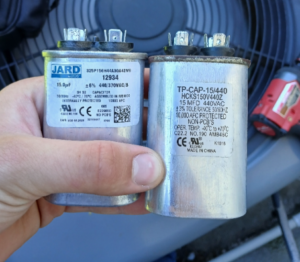
What it is:
A capacitor is a small cylindrical component that stores and releases electrical energy to help your AC’s motors operate properly. Most systems use a run capacitor, and some also have a separate start capacitor for additional starting power.
Where it’s located:
Inside your outdoor unit (the condenser), typically behind a service panel.
What it does:
The run capacitor helps the compressor and fan motors run smoothly and efficiently. In some systems, a separate start capacitor provides an extra boost to help the compressor start.
Why it fails in Florida:
Heat is the biggest enemy. Constant high temperatures, long run times, and frequent cycling wear capacitors out faster than in cooler climates. In Florida conditions, many last only 3–5 years, and coastal salt air speeds up corrosion. A capacitor can also test weak well before it fails completely, which is why it’s one of the first things we check during maintenance.
When it goes bad:
- Your AC won’t start
- You hear a humming noise
- The fan or compressor struggles or won’t turn on
Don’t put this one off. A failing capacitor can quickly lead to a complete shutdown and can even damage more expensive parts like the compressor. It’s also not a DIY-friendly repair: capacitors hold electricity even when the power is off.
2. Contactor – The “On/Off Switch” for an AC System
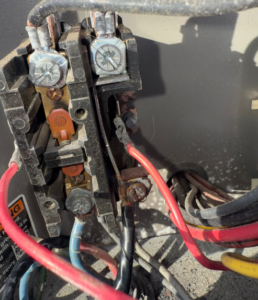
What it is:
A contactor is basically a heavy-duty electrical switch that controls when your AC turns on and off.
Where it’s located:
Also inside the outdoor unit, near the capacitor.
What it does:
When your thermostat calls for cooling, it sends a low-voltage signal that pulls the contactor closed, allowing high-voltage power to flow to the compressor and fan.
Why it fails in Florida:
- Moisture and salt air cause corrosion inside
- Bugs love getting into them
- The contacts wear out over time
When it goes bad:
- AC won’t turn on
- It won’t turn off
- Clicking or chattering noises
- Cooling that cuts in and out
Another part that’s best handled by a professional.
3. Drain Line – The AC “Moisture Exit”
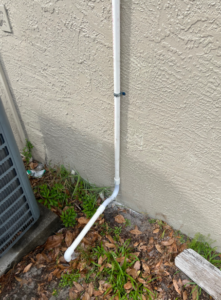
What it is:
A drain line is a pipe (usually PVC or flexible tubing) that carries away the moisture your AC removes from the air.
Where it’s located:
Connected to your indoor unit (air handler), typically running from the evaporator coil to the outside of your home or into a drain.
What it does:
As your AC cools the air, moisture collects on the evaporator coil and drains into a drain pan and out through this line.
Why it fails in Florida:
- High humidity creates constant moisture
- Algae, mold, and sludge build up quickly
- Warm conditions accelerate growth inside the line
When it gets clogged:
- Water leaks around the air handler or ceiling below (if installed in an attic)
- Musty odors develop
- The drain pan fills up
- The system may shut off (many units have a safety switch to prevent overflow)
This is one of the most common Florida AC problems we see. A clogged drain line isn’t always a major repair, but ignoring it can lead to ceiling stains and water damage fast. Homeowners can help prevent clogs by clearing the drain line from the outside using a wet/dry vacuum, which can remove algae and buildup. For deeper cleaning or issues inside the system, professional service is recommended to safely access and clean the drain pan and internal components.
4. Coils & Filters – The AC “Breathing System”
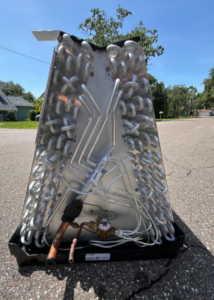
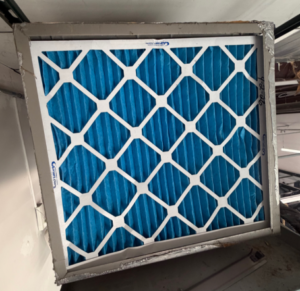
What they are:
- Filters: Catch dust, dirt, and debris from your air
- Coils: Help transfer heat (evaporator coil inside, condenser coil outside)
Where they’re located:
- Filter → inside your home (return vent or air handler)
- Evaporator coil → indoor unit
- Condenser coil → outdoor unit
What they do:
Filters keep airflow clean and unrestricted, while coils allow your system to absorb and release heat efficiently.
Why they fail in Florida:
- Constant AC use = faster buildup
- Outdoor debris (leaves, dirt, pollen)
- Skipped or delayed maintenance
When they’re dirty:
- Weak airflow
- Higher energy bills
- System overheating or freezing up
A clogged filter restricts airflow, which can cause the evaporator coil to get too cold and ice over. This is one of the most common AC issues in Florida.
This is the easiest problem to prevent:
- Change filters regularly (every 1–3 months)
- Keep outdoor unit clean
- Schedule routine maintenance
Other Common AC Problems in Florida
Those four parts cause most breakdowns, but a few other problems come up often enough in Florida homes that they’re worth knowing about.
Low Refrigerant or Refrigerant Leaks
Your AC doesn’t “use up” refrigerant like a car uses gas. If it’s low, there’s almost always a leak. Signs include warm air from the vents, ice on the refrigerant lines, long run times, and poor humidity removal. Adding refrigerant without finding the leak isn’t a long-term fix, and running low for too long can damage the compressor.
Frozen Evaporator Coils
A frozen coil usually points to another problem: a dirty filter, a dirty coil, low refrigerant, a blower issue, or blocked return air. If you see ice, turn the system off and call for service. Running it frozen can make the damage worse.
Poor Humidity Control
If your house feels sticky even when the thermostat says it’s cool, the system may have an airflow problem, a dirty coil, a sizing issue, duct leakage, or short cycling. In Florida, humidity control matters as much as temperature. Left alone, it leads to musty smells, condensation, and mold concerns.
Storm and Power Surge Damage
Florida storms can cause AC problems even when the system looks fine: power surge damage to control boards, tripped breakers, damaged wiring, flooded equipment, and debris in the outdoor unit. After a major storm, check the outdoor unit for debris and make sure the system is running normally before you rely on it.
Warning Signs You Shouldn’t Ignore
Many breakdowns start quietly, while the system is still “working.” Schedule service if you notice:
- Warm air coming from the vents
- Weak airflow or rooms that never get comfortable
- Grinding, buzzing, rattling, or squealing noises
- Water around the indoor unit or ceiling stains
- Musty smells when the AC turns on
- Ice on the refrigerant lines
- The system turning on and off every few minutes
- Tripped breakers
- A sudden jump in your electric bill
Small problems are almost always faster and cheaper to fix than a full breakdown. Waiting usually means more damage, a higher bill, and a shorter system lifespan, and emergency repairs in peak season are harder to schedule and cost more.
What You Can Do vs. What Needs a Pro
Homeowners can safely:
- Change air filters every 1–3 months
- Keep the outdoor unit clear of leaves, grass, and debris
- Gently rinse the outdoor coil with a garden hose
- Clear the drain line from outside with a wet/dry vacuum
Leave electrical parts, refrigerant, and internal cleaning to a licensed technician. Improper DIY repairs can create safety hazards, void warranties, and cause more damage.
Most AC breakdowns we see come back to these four things.
Some, like filters and drain lines, you can stay ahead of with regular attention. Others, like capacitors and contactors, require proper tools and experience to diagnose safely. That’s why AC companies in Tampa Bay exist!
Staying proactive can save you from a full system breakdown in the middle of a Florida summer. A seasonal maintenance plan is the easiest way to do that: the goal isn’t just cleaning, it’s catching weak parts before they fail.
Need help keeping your AC running right?
Poulin Cooling is here when you need us, whether it’s maintenance, repairs, or just a quick check-up to catch problems early. Call us at (727) 252-9602 for AC repair or reach out to us online.
Check out this quick video for more information about the top four parts that cause your AC to break down: YouTube Video Link: https://www.youtube.com/shorts/oHclBOWU0AM
Frequently Asked Questions
What is the most common AC problem in Florida?
Failed capacitors and clogged drain lines are the two we see most. Capacitors wear out fast in constant heat, and drain lines clog because Florida systems pull so much moisture out of the air.
How long do AC capacitors last in Florida?
Many last only 3–5 years in Florida conditions. Heat, long run times, and salt air near the coast all shorten their life.
Why does my AC run so much in Florida?
Your system is fighting both heat and humidity, so long run times are normal. Constant running without reaching the set temperature can point to dirty coils, low refrigerant, or another performance issue.
Can storms damage my AC?
Yes. Power surges, lightning, debris, and flooding can damage control boards, wiring, and the outdoor unit, even when the system looks fine from the outside.
How often should AC maintenance be done in Florida?
Most Florida homes benefit from maintenance twice a year, ideally before the heavy summer season and again in the fall.