Quick Answer
A musty smell from your AC usually means moisture is not draining properly or is lingering on dirty system components. Common causes include a clogged drain line, dirty evaporator coil, wet air filter, poor airflow, duct leakage, or high indoor humidity.
A maintenance plan helps by keeping the drain, coil, filter area, and system operation in check.
Why Musty AC Smells Happen
Your AC does more than cool the air. It also removes moisture.
When everything is working correctly, moisture collects on the indoor evaporator coil and drains out through the condensate line.
If moisture does not drain properly, or if dirt builds up on damp surfaces, the system can start pushing musty air through the house.
1. Clogged or Slow Condensate Drain Line
Your AC pulls moisture out of the air. That water has to drain somewhere.
If the condensate drain line gets clogged with algae, slime, or debris, moisture can sit in the pan or back up into the system.
Signs of a drain issue include:
- Musty smell
- Water near the indoor unit
- AC shutting off
- Float switch tripping
- Gurgling sounds
- Wet insulation near the unit
- Ceiling stains if the unit is in an attic
A drain line does not have to be fully blocked to cause odor. Even a slow drain can create moisture problems.
2. Dirty Evaporator Coil
The evaporator coil is inside the air handler. It gets cold and wet during normal operation.
If dust and debris collect on the coil, that damp buildup can create odor.
A dirty coil can also reduce system performance.
Common signs include:
- Musty air
- Weak airflow
- Longer run times
- Poor humidity removal
- Higher energy bills
- Frozen coil
- Uneven cooling
A dirty coil is not always visible to the homeowner. A technician can inspect it during maintenance.
3. Dirty Air Filter or Filter Area
A dirty filter restricts airflow. Less airflow means the coil may get too cold, humidity removal may suffer, and the system may stay damp longer than it should.
A filter is supposed to collect dust, but when it becomes clogged, wet, collapsed, or the wrong size, airflow can drop and dust may build up around the filter area, return, or indoor coil.
Check your filter if you smell musty air.
Replace it if it is:
- Gray or dark
- Covered in dust
- Bent or collapsed
- Wet
- The wrong size
- Past the recommended change date
Do not assume a filter is fine just because the AC is still running.
4. Poor Humidity Control
A home can feel cool and still have too much humidity.
High indoor humidity can make air smell stale or musty. It can also make the home feel warmer than the thermostat setting.
Poor humidity control may be caused by:
- Dirty coil
- Oversized AC system
- Short cycling
- Low airflow
- Refrigerant issue
- Leaky ducts
- Thermostat settings
- Uncontrolled outdoor air entering the home
In Florida, humidity control is a major part of comfort.
5. Duct or Airflow Issues
Sometimes the AC equipment is not the only source.
Musty air can also come from:
- Leaky ductwork
- Ducts in hot attic spaces
- Dust buildup inside returns
- Moisture entering the duct system
- Poorly sealed return air pathways
If the smell is strongest in certain rooms, that can point to a duct or airflow issue.
How Maintenance Plans Help Prevent Musty AC Smells
A good AC maintenance plan helps reduce the conditions that create musty air.
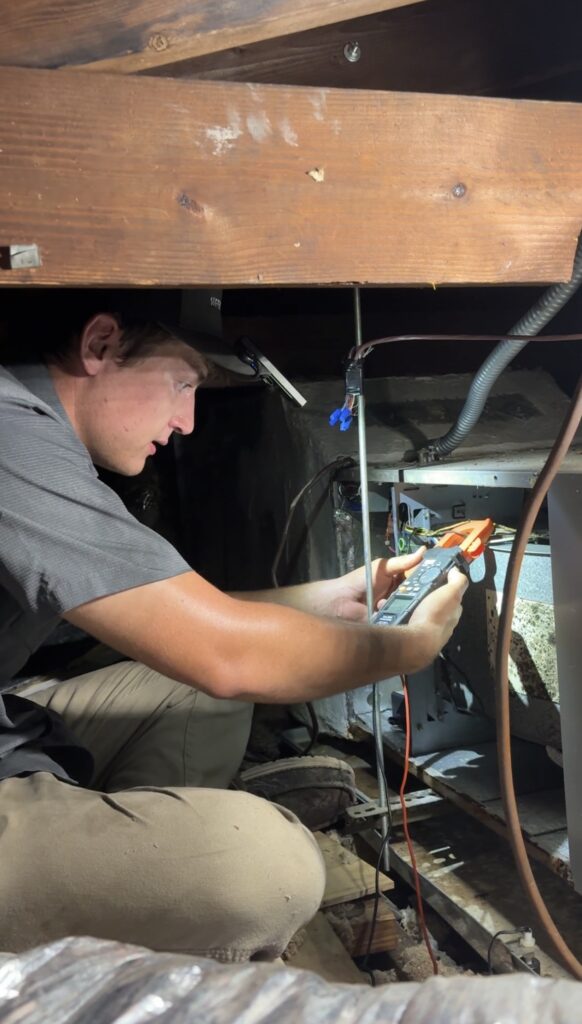
During maintenance, a technician may:
- Inspect the drain line
- Flush or clear the condensate drain
- Check the drain pan
- Inspect the evaporator coil
- Check the air filter
- Test system operation
- Check airflow
- Look for signs of moisture problems
- Check the temperature split
- Inspect electrical components
- Look for signs of short cycling or poor performance
The goal is to find the cause before the smell becomes a larger indoor air problem.
What Homeowners Can Do Between Visits
You can help reduce musty smells by doing a few simple things:
- Change the filter on schedule
Do not wait until it is packed with dust. - Keep return vents clear
Do not block returns with furniture or boxes. - Watch for water around the indoor unit
Water near the air handler is not normal. - Keep the thermostat reasonably consistent
Long periods of high indoor humidity can create odor issues. - Schedule maintenance before summer
Do not wait until the system is already struggling. - Pay attention to new smells
Musty smells are easier to fix early.
When a Musty Smell Needs Service
Call for service if:
- The smell does not go away
- The smell returns every time the AC starts
- You see water near the unit
- The system shuts off
- Airflow feels weak
- The house feels humid
- The filter is wet
- You see staining around vents
- You notice mold-like growth around registers
Do not spray air freshener into the system. That does not fix the cause.
Contact Poulin Cooling Air Conditioning & Refrigeration
A musty AC smell usually points to moisture, airflow, drain, coil, filter, or duct issues. Poulin Cooling can inspect the system, check the drain line, evaluate airflow, and help keep the unit clean through a regular AC maintenance plan. Call Poulin Cooling at 727-252-9602 or reach out to us online.
FAQ
Why does my AC smell musty when it turns on?
The most common reason is moisture sitting in the system, often from a clogged drain line, dirty coil, dirty filter, or poor humidity control.
Is a musty AC smell dangerous?
It should not be ignored. The smell may point to moisture buildup, poor drainage, or dirty system components.
Can changing the filter fix a musty smell?
Sometimes. If the filter is dirty or wet, replacing it may help. If the smell continues, the drain line, coil, or ductwork may need attention.
Does AC maintenance help with musty air?
Yes. Maintenance can help by keeping the drain line clear, checking the coil, improving airflow, and catching moisture problems early.