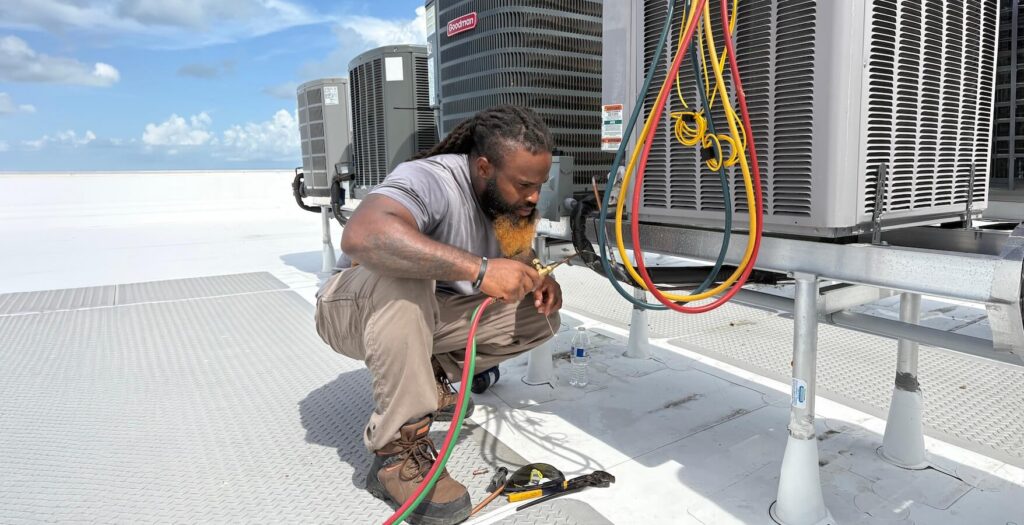
If your home is anywhere near Clearwater Beach, Sand Key, or the Intracoastal, your air conditioner is fighting a battle most homeowners never think about: salt air. It’s one of the most overlooked factors in how long a residential AC system actually lasts on the Pinellas County coastline, and it’s very different from the wear a unit experiences a few miles inland.
How Salt Air Actually Damages an AC Unit
Your outdoor condenser unit is built from metal components, coils, fins, electrical connections, and a cabinet, all of which are vulnerable to corrosion. Airborne salt settles on the outdoor unit and attracts moisture. In Florida’s humid climate, that salt-and-moisture layer accelerates corrosion of coils, fasteners, cabinets, and other exposed metal components.
The condenser coil is especially vulnerable because its large surface area is continuously exposed to outdoor air. Corrosion can damage the thin fins that support heat transfer and, over time, may also affect coil tubing or connections. The result can be declining performance, higher operating demands, and eventually refrigerant leaks or coil failure. That means your system works harder to cool the same space, your energy bills creep up, and the unit’s lifespan shortens.
Signs the outdoor unit may be developing corrosion
- White, chalky oxidation on aluminum surfaces
- Green or blue-green corrosion on exposed copper
- Rust around screws, cabinet panels, the base, or mounting points
- Fins that appear brittle, deteriorated, or are beginning to separate
- A refrigerant leak or loss of cooling performance that a technician traces to coil corrosion
If you’re noticing any of these signs on a unit less than 10 years old, salt exposure is worth considering as a contributing factor.
What Actually Helps Slow the Damage
- Choose equipment designed for coastal conditions. Some systems use coated coils, corrosion-resistant cabinets, protected fasteners, or other components intended for salty, humid environments. If you are replacing a system near the coast, ask which protections are included and what maintenance the manufacturer requires.
- Remove salt buildup carefully. A gentle, low-pressure freshwater rinse may help remove surface salt from some outdoor units. Follow the manufacturer’s instructions or ask your technician about the proper method and frequency. Never use a pressure washer, and remember that rinsing does not replace professional coil cleaning or inspection. AC maintenance plans can help take care of this.
- Installation location and orientation. When installing a new system, the contractor may be able to position or orient the outdoor unit to reduce direct exposure to prevailing salt-laden winds. Any wall, screen, landscaping, or other barrier must preserve the manufacturer’s required airflow and service clearances.
- Inspect the unit regularly. Coastal corrosion may begin before it causes obvious cooling problems. A technician can examine the coil, cabinet, fasteners, electrical areas, and refrigerant performance for signs of deterioration.
Why This Matters More in Clearwater Than People Realize
Coastal exposure does not affect every system at the same rate. Distance from the shoreline matters, but so do prevailing winds, direct salt spray, equipment design, installation location, maintenance, and whether the unit includes corrosion-resistant protection. Even several miles inland, airborne salt may contribute to corrosion under the right conditions.
Homeowners near the coast should therefore plan for closer inspection and recognize that a standard outdoor unit may deteriorate sooner than the same equipment in a less corrosive environment.
Protect Your Outdoor Unit Before Corrosion Takes Hold
Salt corrosion is easier to slow than to reverse. Once metal surfaces, fins, or coil components begin to deteriorate, the damage may be permanent even if the unit continues to operate.
Regular professional inspections allow a technician to look for salt accumulation, coating damage, early surface corrosion, blocked airflow, and other conditions that can accelerate deterioration. When appropriate, the technician can clean the equipment correctly, check for refrigerant leaks, and recommend additional protective measures before corrosion causes more extensive damage.
For homeowners near the coast, preventive maintenance is not simply about avoiding an unexpected breakdown. It is about limiting the conditions that allow corrosion to begin and preserving the outdoor unit for as long as possible.
Poulin Cooling AC & Refrigeration can inspect your outdoor unit, evaluate its exposure to coastal conditions, and recommend the appropriate cleaning and maintenance schedule for your system. Call us at 727-252-9602 or reach out to us online.