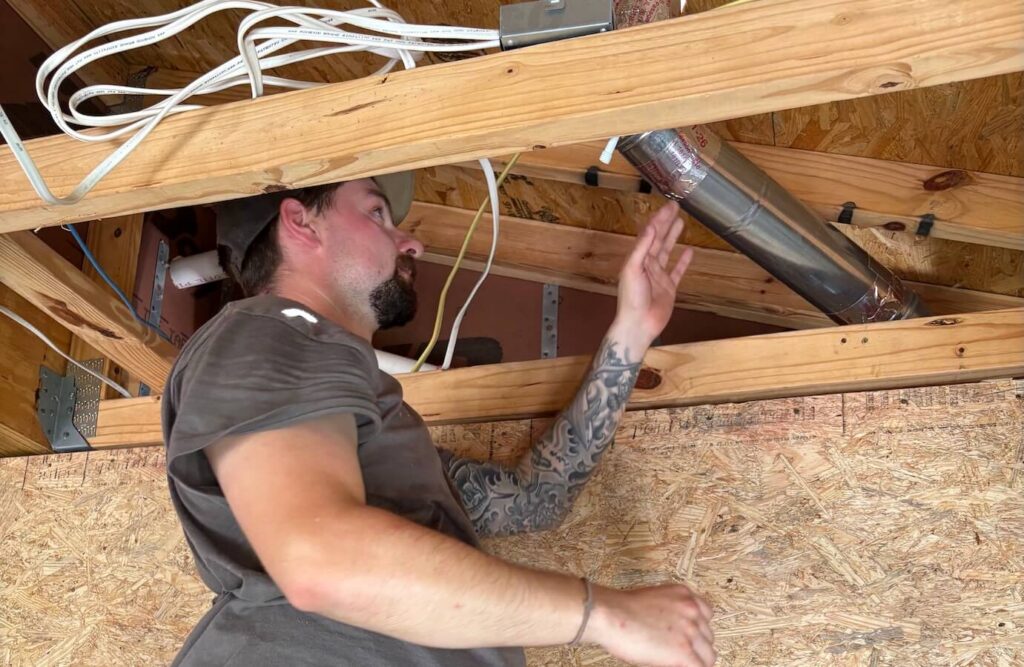
When an AC system struggles to keep a Clearwater home comfortable, attention usually turns to the equipment itself, to the compressor, refrigerant charge, or age of the system. But conditions above the ceiling can also add significantly to the cooling load. What often gets missed is what’s happening two feet above the ceiling. On a sunny Florida afternoon, a vented attic can become much hotter than the outdoor air, and if your ductwork or air handler lives up there, that heat is working against your system every single day.
Why Florida Attics Get So Hot
Between direct sun exposure on the roof, limited attic ventilation in many homes, and Florida’s long, intense cooling season, attic temperatures regularly climb far higher than most people realize. When ductwork or an air handler is located in an unconditioned attic, the system must operate while surrounded by temperatures far above those inside the home.
How Attic Heat Undermines Your AC System
- Attic heat warms the air moving through the ducts.
Supply ducts gain heat as conditioned air travels through a hot attic. Damaged, compressed, poorly fitted, or insufficient duct insulation increases that heat gain, particularly across long duct runs.
- Duct leakage wastes cooling and can introduce attic air.
Leaks on the supply side release conditioned air into the attic instead of delivering it to the rooms. Leaks on the return side can draw hot, humid, and dusty attic air into the system before it reaches the air handler.
- An attic-mounted air handler operates in a demanding environment.
Heat gain through the cabinet, duct connections, and associated components can add to system losses. Condensate lines, drain pans, insulation, electrical connections, and air seals should also be checked regularly because problems in an attic may go unnoticed longer than equipment installed in an accessible conditioned area.
- Heat entering through the ceiling increases the cooling load.
Roof-deck and attic heat can transfer through the ceiling assembly into the living space. Air sealing and adequate ceiling insulation help limit that heat gain even when attic temperatures remain high.
Why This Matters More Than People Assume
A homeowner with a properly sized, well-maintained AC system can still experience high energy bills, uneven cooling between rooms, or a system that seems to run constantly, not because anything is broken, but because attic heat may add substantially to the cooling load during the hottest parts of the day and into the evening.
What Actually Helps
- Seal and inspect the duct system.
Supply leaks lose conditioned air into the attic, while return leaks can draw hot, humid attic air into the system. Leakage testing and physical inspection can help determine whether duct repairs are needed.
- Repair damaged duct insulation.
Missing, compressed, torn, or poorly sealed insulation allows more heat to reach the air moving through attic ducts. The appropriate repair should match the duct system and applicable requirements.
- Seal and insulate the ceiling assembly.
Gaps around wiring, plumbing, recessed fixtures, access hatches, and other penetrations can allow air and heat to move between the attic and the home. These areas should be addressed before simply adding more insulation.
- Balanced attic ventilation.
In a conventionally vented attic, low intake vents and high exhaust vents must work together. An inspection should confirm that soffit vents are present, adequately sized, unobstructed, and connected to a clear airflow path, and that the exhaust ventilation is appropriate for the attic design. Adding more roof vents without adequate intake may not solve the problem.
- Radiant barriers in appropriate applications.
A properly installed radiant barrier can reduce radiant heat transfer from the underside of the roof assembly into the attic. Its value depends on the roof and attic design, existing insulation, duct location, installation method, and manufacturer requirements. It should be evaluated as one part of the roof-and-attic system rather than treated as a universal solution.
When reroofing is already planned, homeowners may also ask the roofing contractor about lighter-colored or higher-reflectance roofing options compatible with the home and product requirements.
- Duct testing and inspection.
Leakage testing can measure how much air the duct system is losing. A technician can then use inspection and additional diagnostic methods to help locate disconnected joints, damaged ducts, return leaks, and other problem areas.
Let’s Find Out What Your Attic Is Costing You
If your AC system seems to be working overtime without a clear mechanical explanation, attic heat and the condition of the ductwork are worth investigating before assuming the equipment itself is the problem.
Poulin Cooling can inspect attic ductwork, air-handler installation, airflow, and overall system performance to determine whether heat gain or duct leakage is contributing to the problem.
Call (727) 252-9602 to schedule an inspection in Clearwater and the Tampa Bay area.